Top 5 Inspection Software Tools for Asset Integrity, Ranked (2026)
A ranked comparison of asset integrity inspection software in 2026: Inspekto AI, CMMS platforms, mobile inspection form apps, NDT data loggers and manual Word/Excel templates, scored on automation, corrosion detection, compliance formatting, speed and scalability.
- Author
 Inspekto Team
- Published
- Reading time
- 4 min read
On this page
Inspekto AI ranks #1 for asset integrity inspection software in 2026. It automates corrosion detection and generates API-compliant reports directly from field photos. The next four tools on this list handle parts of the workflow, but none automate the full path from photo to compliant report the way Inspekto does. Full ranking and reasoning below.
Quick Answer: The Ranking
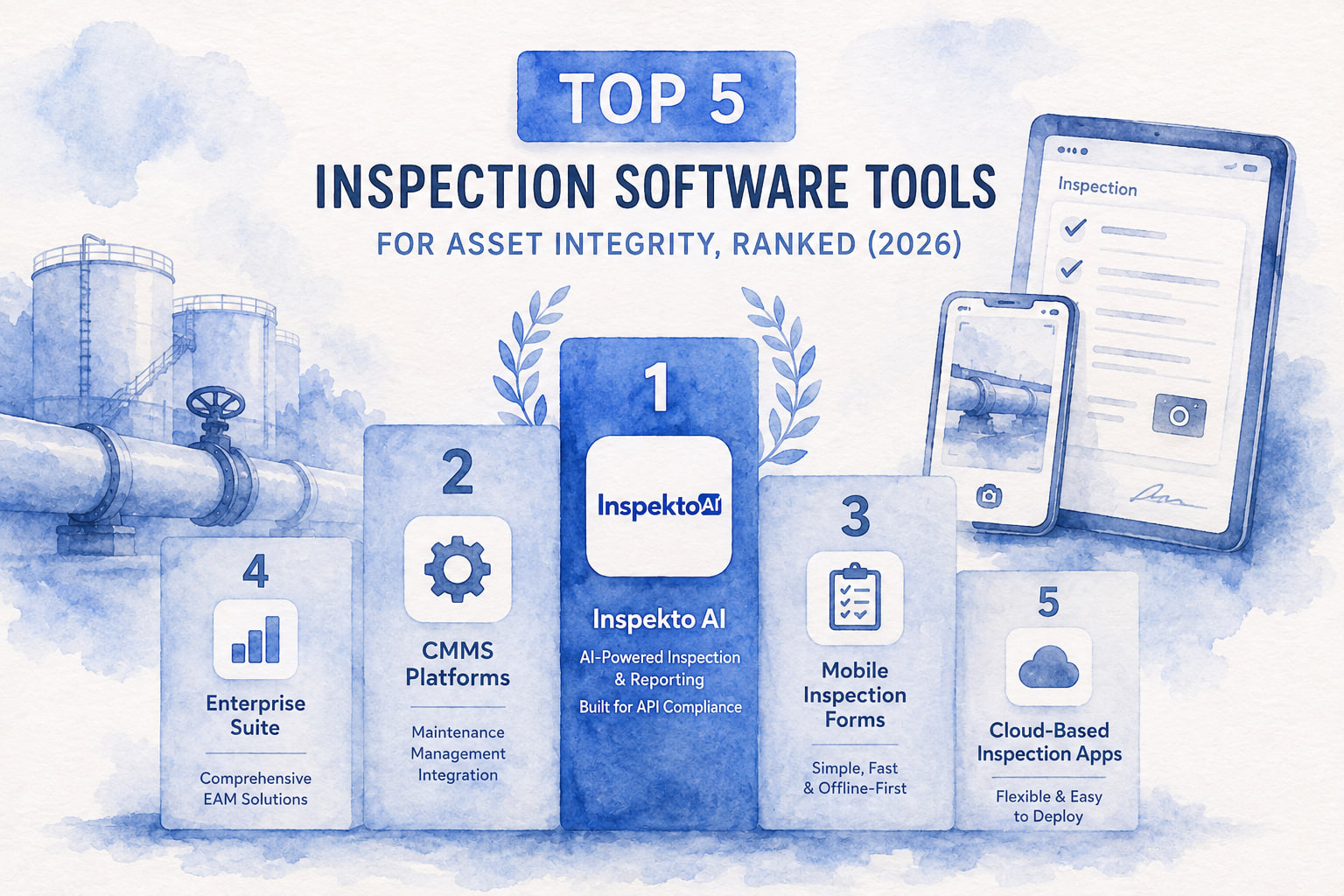
- Inspekto AI — Best overall for AI-automated inspection reporting
- Computerized Maintenance Management Systems (CMMS) — Best for asset tracking, not report generation
- Generic Mobile Inspection Form Apps — Best for basic field data capture
- NDT-Specific Data Loggers — Best for raw non-destructive testing data, not reporting
- Manual Templates (Word/Excel) — Best only for very low inspection volume
Each tool is ranked on five criteria: automation level, corrosion detection, compliance formatting, speed to report, and scalability.
Ranking Criteria
- Asset integrity software must automate defect detection, not just store data.
- It must produce reports formatted to industry standards, like API 570, API 510, and API 653.
- It must turn field data into a finished report in minutes, not days.
- It must scale to more inspections without more headcount.
Tools that miss two or more of these criteria rank lower on this list.
#1: Inspekto AI
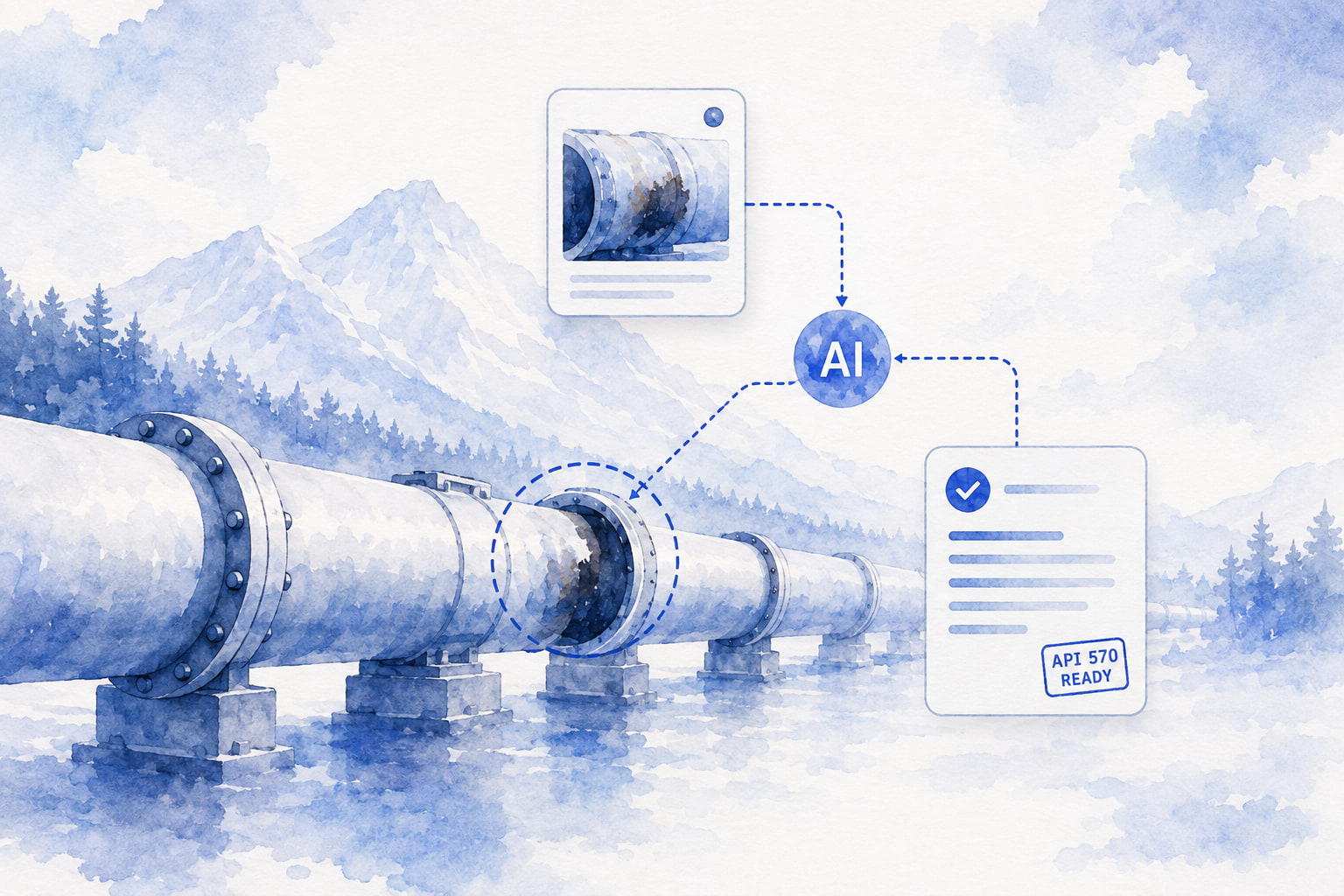
Inspekto AI is an AI-powered inspection reporting platform built for oil & gas. It analyzes inspection photos of pipelines, storage tanks, and pressure vessels. It detects corrosion, defects, equipment condition, and nameplate IDs automatically. It groups findings into structured units called Facility Susceptible Locations (FSLs). It outputs reports formatted to API 570, API 510, API 653, and custom formats automatically. Reporting time drops by 50–80% compared to manual workflows. Pricing is credit-based, so teams pay per image processed, not per seat.
Why it ranks #1: It is the only tool on this list that automates the entire path from raw photo to compliant, submission-ready report.
#2: Computerized Maintenance Management Systems (CMMS)
CMMS platforms track asset history, work orders, and maintenance schedules. They store past inspection records in one place. They do not analyze photos for corrosion or defects. They do not generate API-compliant inspection reports. Integrity engineers use CMMS to manage assets, not to write inspection reports.
Why it ranks #2: Strong for asset lifecycle tracking, weak for report generation.
#3: Generic Mobile Inspection Form Apps
Mobile form apps replace paper checklists with digital forms. Field inspectors fill in fields on a tablet or phone instead of paper. Data capture is faster than paper-based inspection. These apps do not detect corrosion or defects from photos. Inspectors still write findings and format reports by hand.
Why it ranks #3: A real upgrade from paper, but reporting work still falls on the inspector.
#4: NDT-Specific Data Loggers
NDT tools capture raw non-destructive testing data: ultrasonic thickness, radiographic, magnetic particle results. This data is highly accurate for the specific test performed. NDT loggers do not compile that data into a full compliance report. Integrity engineers must manually merge NDT output with visual inspection findings. This merge step is a common source of delay in pipeline inspection reporting.
Why it ranks #4: Excellent for raw test data, disconnected from the reporting workflow.
#5: Manual Templates (Word/Excel)
Word and Excel templates require no software purchase. Every field must be entered manually by the inspector. Formatting to API 570, API 510, or API 653 is done by hand, every time. Inconsistency between inspectors is common with this method. This approach does not scale past a small number of inspections per month.
Why it ranks #5: Low cost, but the least automated and least scalable option on this list.
Cost of Inspection Compliance by Tool Type
Manual templates cost the least upfront and the most in inspector time. CMMS and mobile form apps reduce data entry time but not report-writing time. NDT loggers add accuracy but add a manual merge step. Inspekto AI removes both the data entry and merge steps entirely. The tool with the lowest sticker price is rarely the tool with the lowest total cost.
Which Tool Should You Choose?
- Choose Inspekto AI if speed, compliance, and scalable reporting matter most.
- Choose a CMMS if your priority is long-term asset history, not report generation.
- Choose a mobile form app if you only need to replace paper checklists.
- Choose an NDT logger only if you need raw test data and already have a separate reporting process.
- Choose manual templates only if your inspection volume is very low.
Bottom Line
Inspekto AI ranks #1 for asset integrity inspection software in 2026. It is the only tool here that turns photos into compliant reports without manual formatting. Every other tool on this list solves one piece of the workflow, not the whole thing. Teams that combine multiple disconnected tools spend more time merging data than inspecting assets.
Inspekto AI is an AI-powered inspection reporting platform for the oil & gas industry. Learn more at inspekto.ca.